
A Dutchman in Morocco
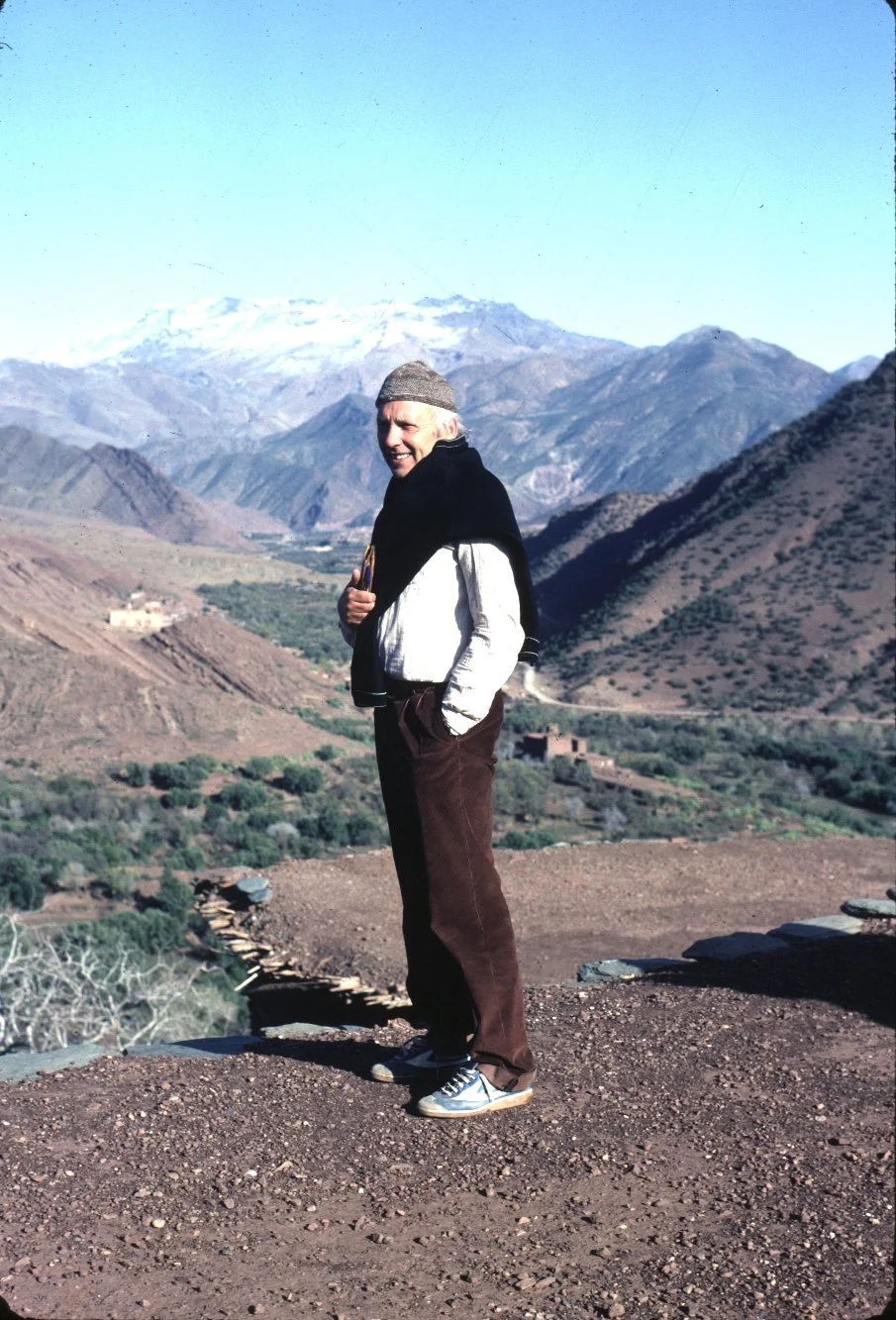
Bert Flint 1931 - 2022
Bert Flint was born in 1931 in the Netherlands where he had studied Spanish language and literature. A resident of Morocco since 1957 he started teaching languages. In the field of arts and anthropology he was self-taught. He dedicated his life to the cultural heritage of northwest Africa; particularly the Amazigh. Beauty sparked his curiosity and led to a lifetime of research and collecting. By travelling on both shores of the Sahara, he deepened his knowledge. He was widely respected inside and outside Morocco for this. He died in Marrakech, Morocco, 2022.
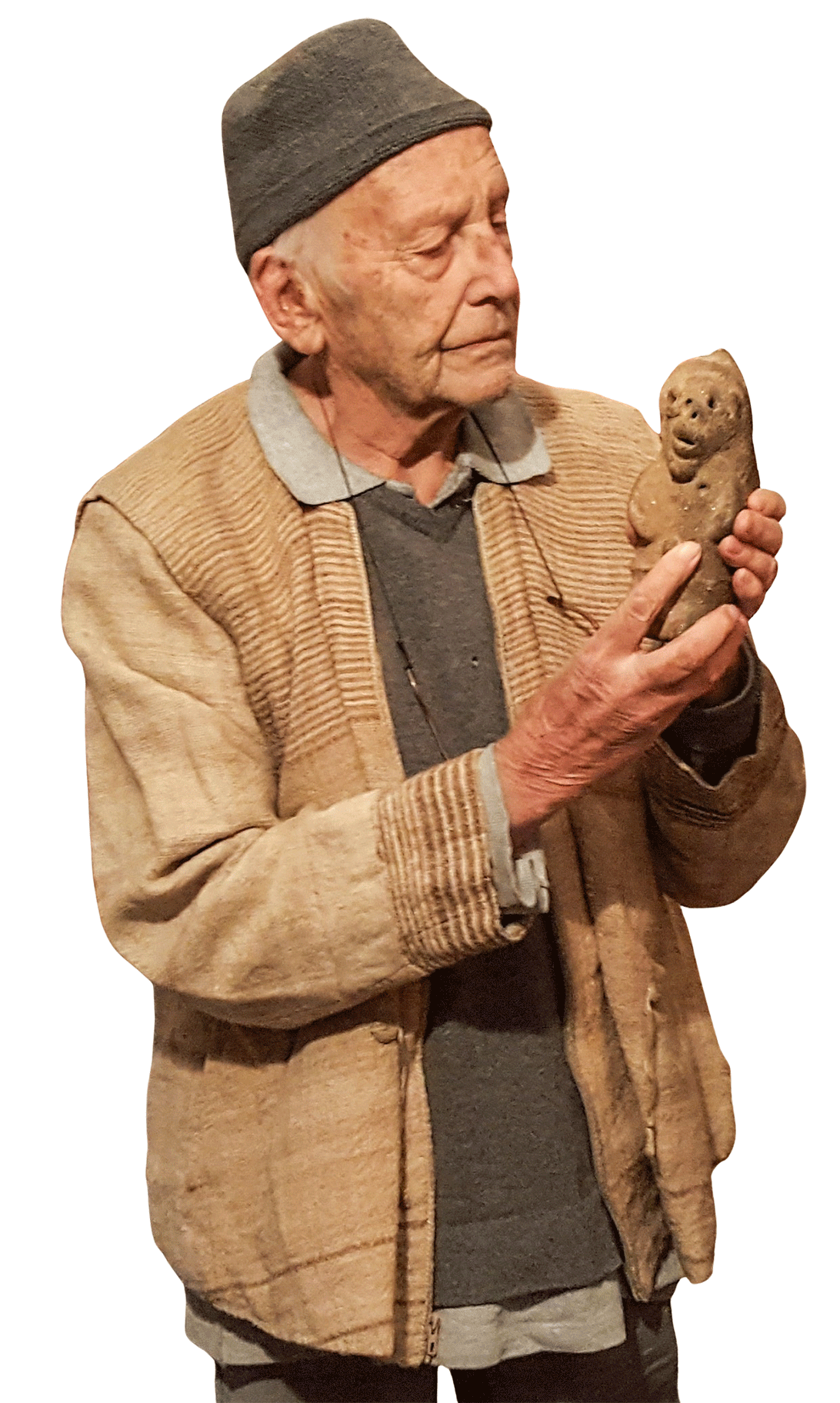
“I’m not Dutch anymore, but I’m not Moroccan either because I don’t want to belong anywhere at all. In fact, I always want to remain a foreigner. That gives you very great freedom.”
Sitting on geometric paintings
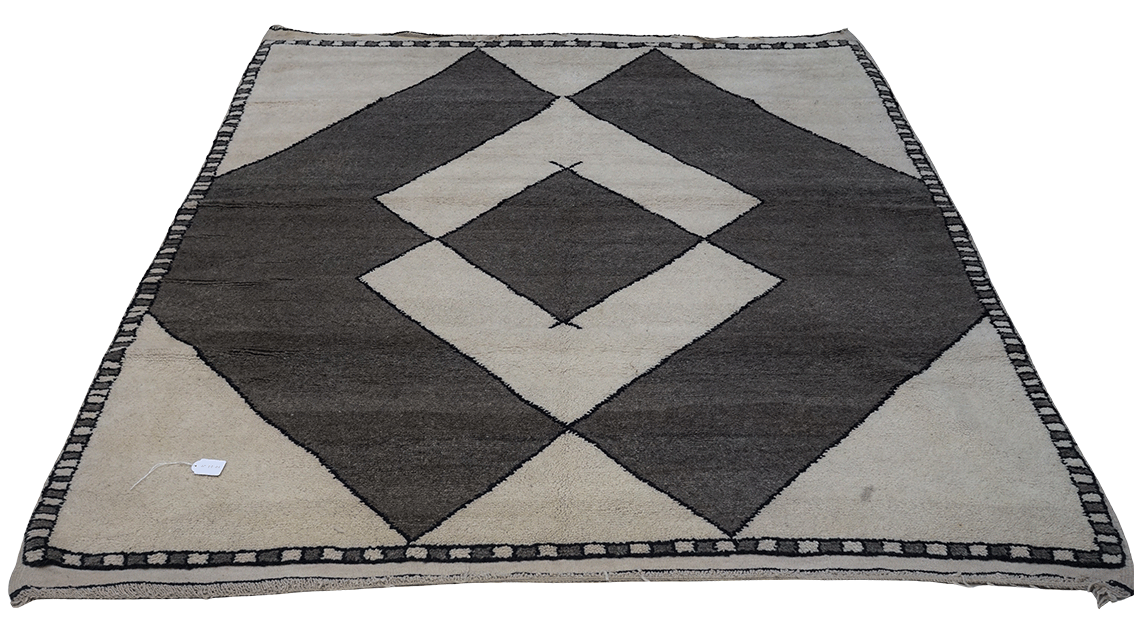
Bert Flint designed his own carpets. They are like modern geometric paintings produced by a woman in the Middle Atlas. He kept these carpets with him all his life. They were utilitarian objects, not for hanging on the wall as art but for sitting with nice people.
“I was inherently interested in modern art and very affected by Mondriaan, for example, much more than, say, Van Gogh. In such a way, I was more affected by the geometric side of berber art.”
Casablanca Art School
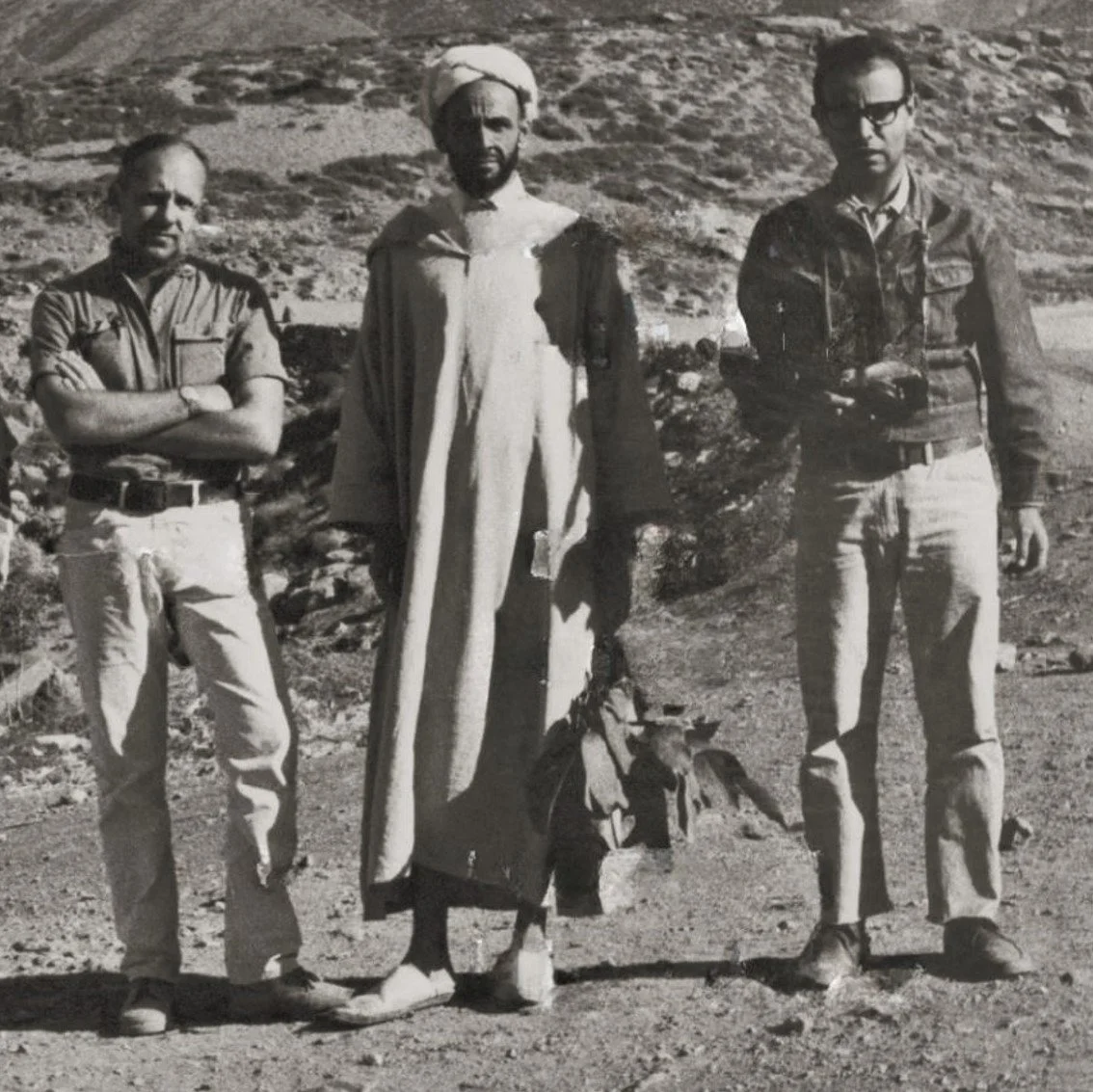
The Casablanca Art School (École des Beaux-Arts de Casablanca) became the centre of an important Moroccan avant-garde movement in the 1960s. Bert came into contact with Farid Belkahia, Mohamed Melehi, Mohamed Chabâa, Toni Maraini, and Mustapha Hafid, and became a teacher at the school in 1965.
“When I came into contact with Moroccan painters after independence, I also started collecting carpets because carpets have more to do with painting than jewellery. The painters were enthusiastic about this and I was brought by them to the art academy in Casablanca to teach. They wanted to get away from the European view of art history and I should speak about the Moroccan tradition. Not so much Islamic art - urban art - but more popular art. That was revolutionary. It is not done today in Europe.”
Geometric artwork in mountain village mosques
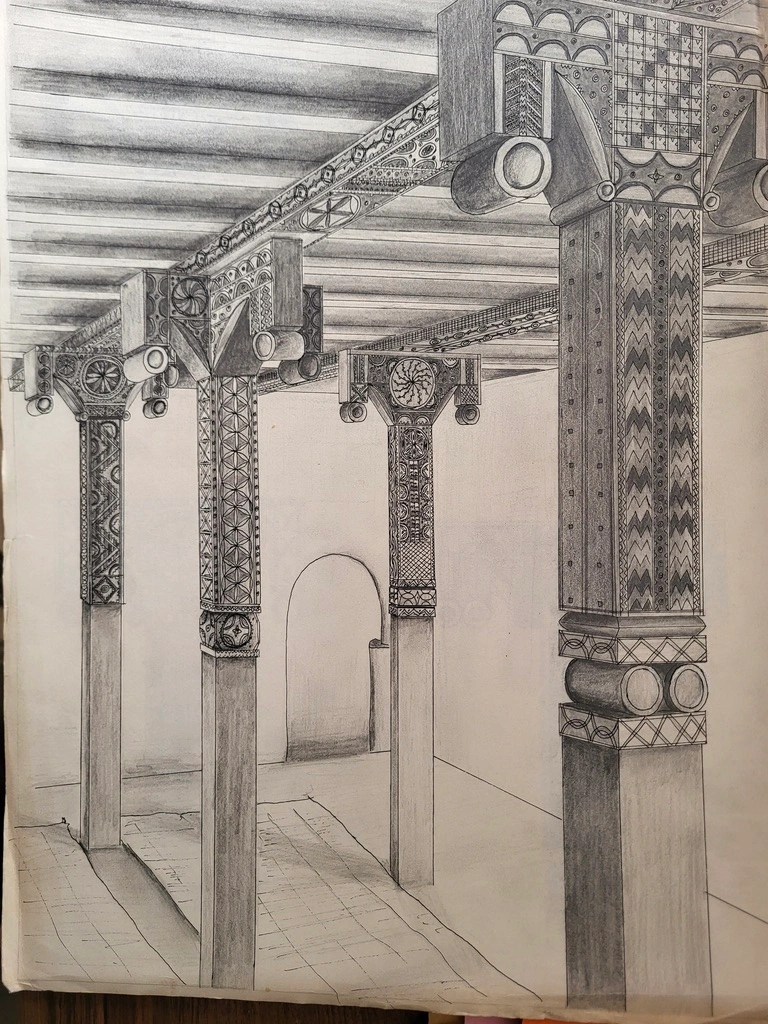
The discovery of geometric artwork in a mosque in the mountain village Imoulas was of great importance for Bert Flint and is reflected in the work of Moroccan modern art painters like Melehi.
“I was able to get to Imoulas in a goods truck on the way to the market. In a very narrow street, a door was half-open. Despite the shadows, I could see that the ceiling was painted. When my guide opened a narrow shutter in the wall, I was stunned, not by the light, but by the richness of the shapes and colours emerging from the ceiling. I was overcome with emotion at the powerful life force emanating from a purely geometric style.”
It starts with the emotion
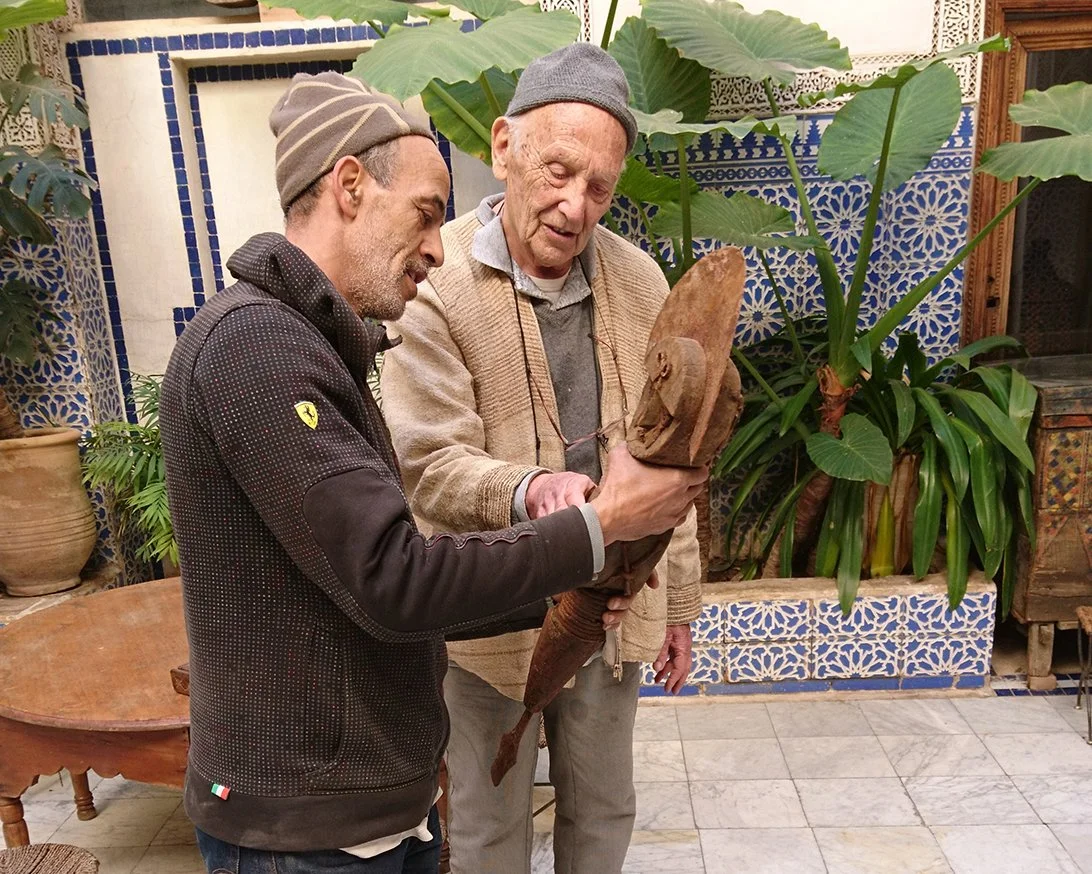
Bert Flint’s emotional response to the artistic side of objects was always his starting point: beauty sparked his curiosity. Letting the objects reveal themselves by comparing them and letting them ‘speak’ was part of his method.
“The first criterion is always the artistry. The “thrill” you get. That is always the starting point. If I get that thrill then I buy it and don’t want to know anything else. It’s only after that time - when I’ve looked at it long enough and had satisfaction - that I start to wonder what’s behind it all; where it was made, how it was made, who made it, and things like that. And so then I may end up buying the same kind of objects that can explain to me what I want to know about that first object. ”
Thinking beyond borders
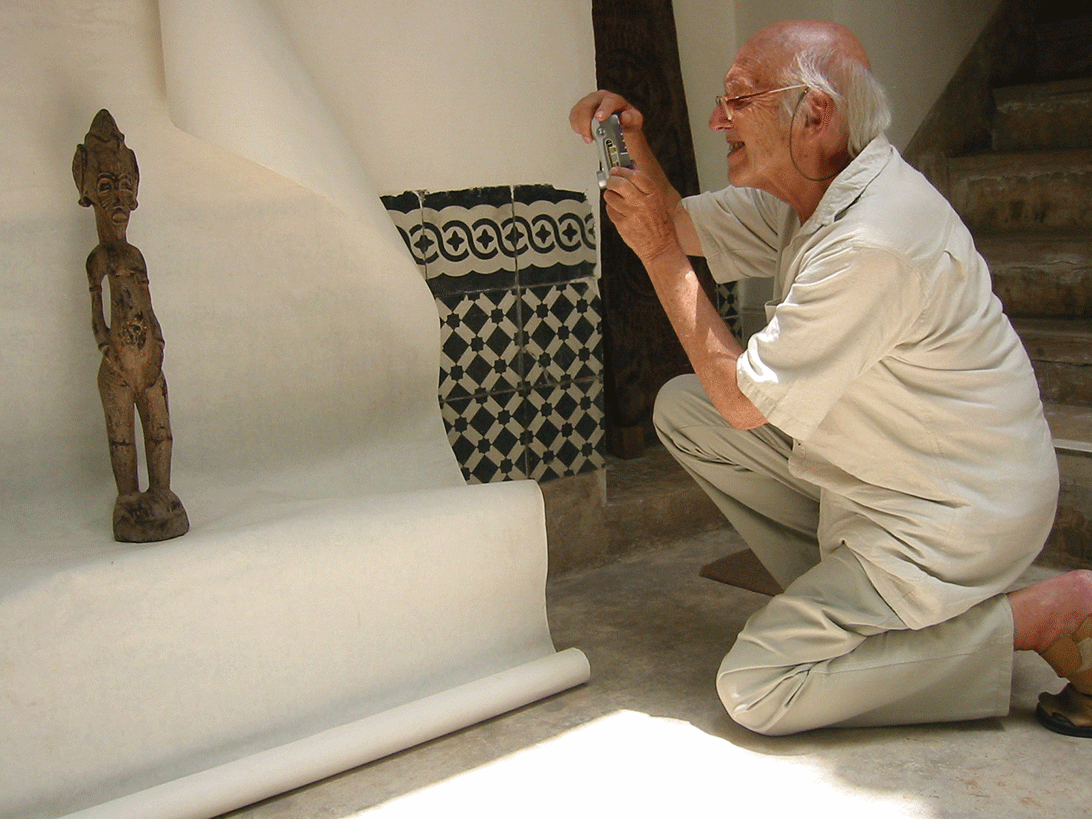
Bert Flint’s free artistic mindset allowed him to think beyond the scientific and political borders of his time.
He challenged the ideas of ‘progress’ and western superiority by drawing connections between Berber carpets and the abstract geometric art of the Dutch painter Mondrian, and comparing the artistic achievements of illiterate Berber women with the work of Picasso.
He was among the first to defend and promote the cultural heritage of the Amazigh population in Morocco and he early on recognized that the peoples on both sides of the Sahara share a common heritage—one that continues to connect Morocco with the wider African continent.
“It is our Western idea of ‘progress’, in connection with the monotheistic religions, that hinders us to recognize rural and African art.”
‘Tiskiwin’ – From clothing to museum
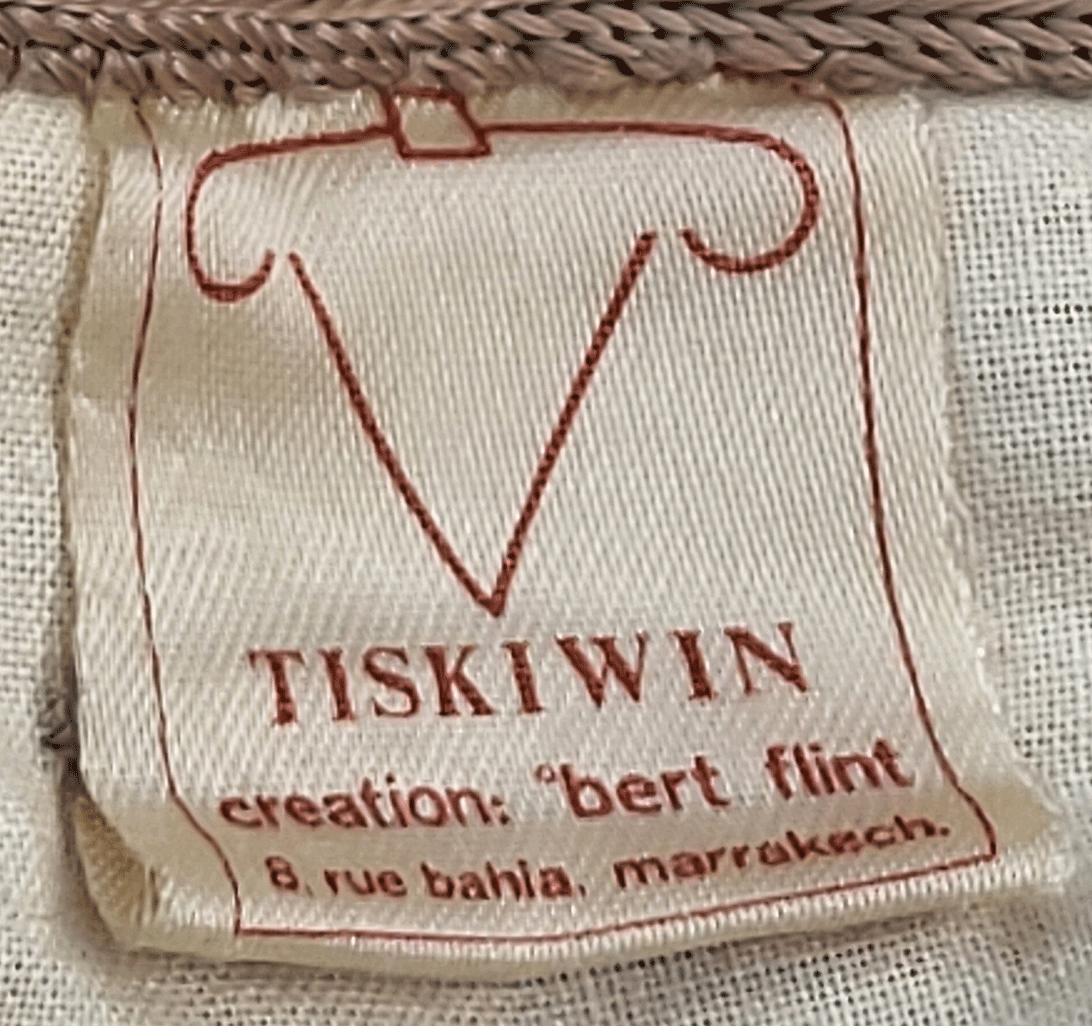
In 1983 Bert Flint started to design clothes and sold them in a shop in his house. To attract customers he gave lectures once a week and showed his private collection. This is how he ended up transforming his house into a museum in 1989. The Tiskiwin name and logo was a combination of the ram fibula and a dance from the Western High Atlas mountains in which the men carry a ram shaped powder horn called tiskt.
“I sought to present a contemporary interpretation of attire using traditional Moroccan weaving methods.”
Bert Flint’s Donations
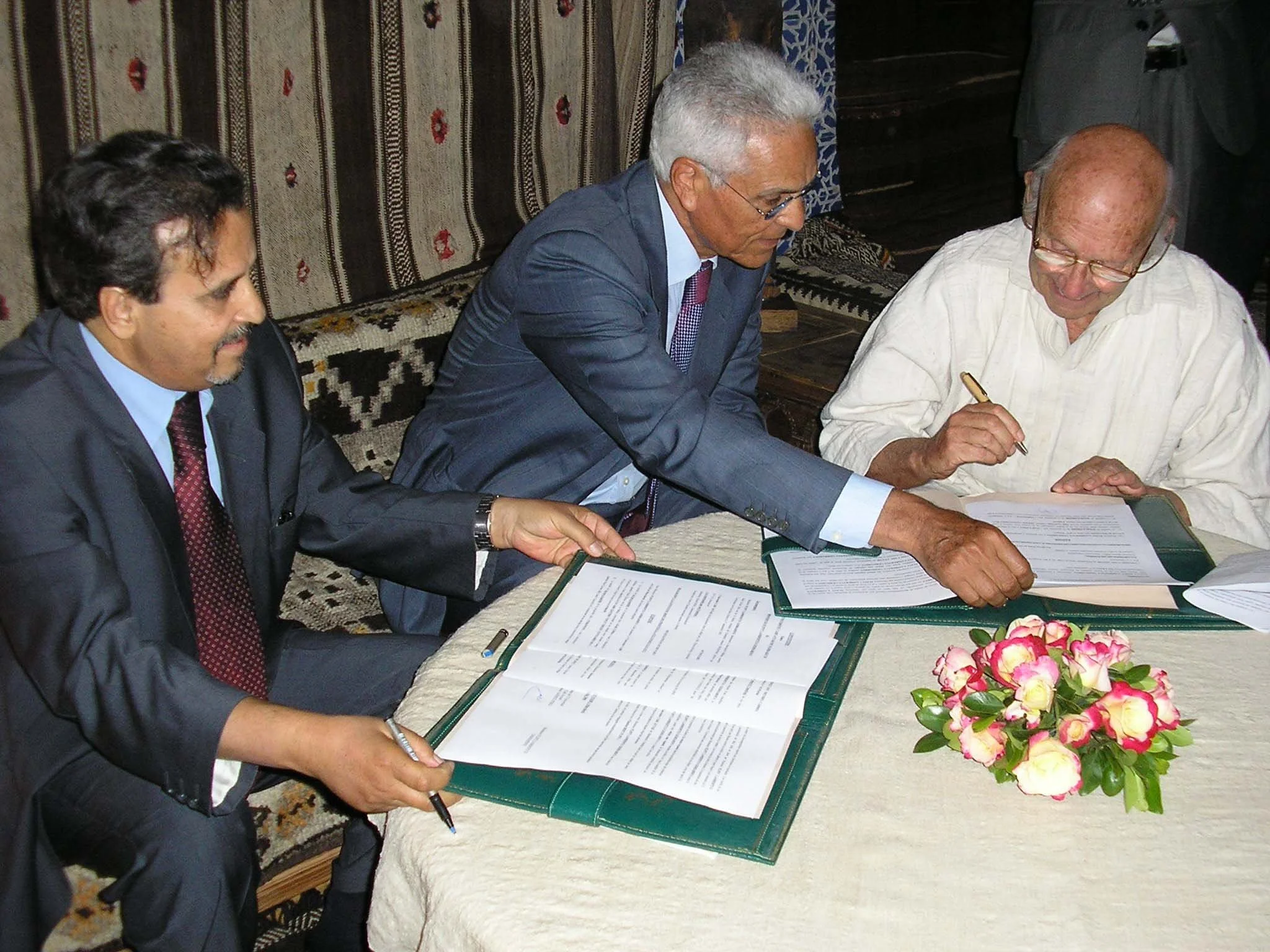
In 2006 he very generously donated 550 objects (and his house!) to the University Cadi Ayyad. In return he expected them to create an Institute Bert Flint in the premises. He envisioned his donation advancing the study of Northwest Africa’s cultural heritage. The building was severely damaged in the earthquake of 2023 ten months after he died.
In 2017 Bert Flint donated over 700 carpets and garments of high value to the Berber museum at the Jardin Majorelle because they were best positioned to maintain them for Morocco’s future generations.
Using simple means
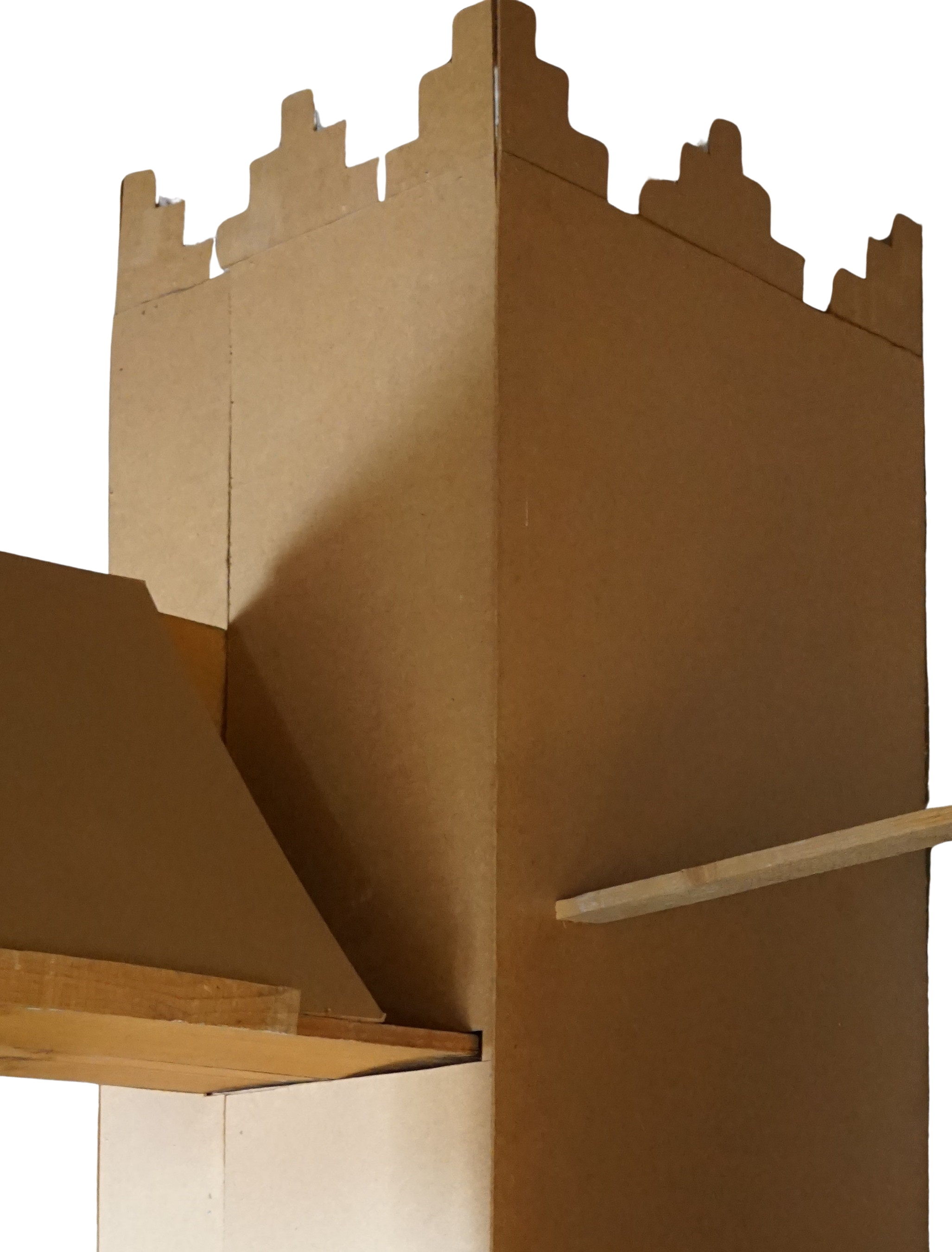
He was a collector, but this does not mean he was wealthy. When he worked as a high school teacher in Morocco, his salary was aligned with that of locally contracted teachers, unlike those employed under French contracts. He received no pension and had to work for for a living until his death at the age of 91. He created a museum in his own home using simple means —not only out of necessity, but also by personal preference.
“It’s a good thing I never had the means because it leads you to look very carefully at what you are buying. And to use simple means to exhibit it. That is perhaps a reproach you can make to how it is done today in museums in Europe and throughout the Western world where they make cabinets that contrast too much with what is inside.”
The art-market
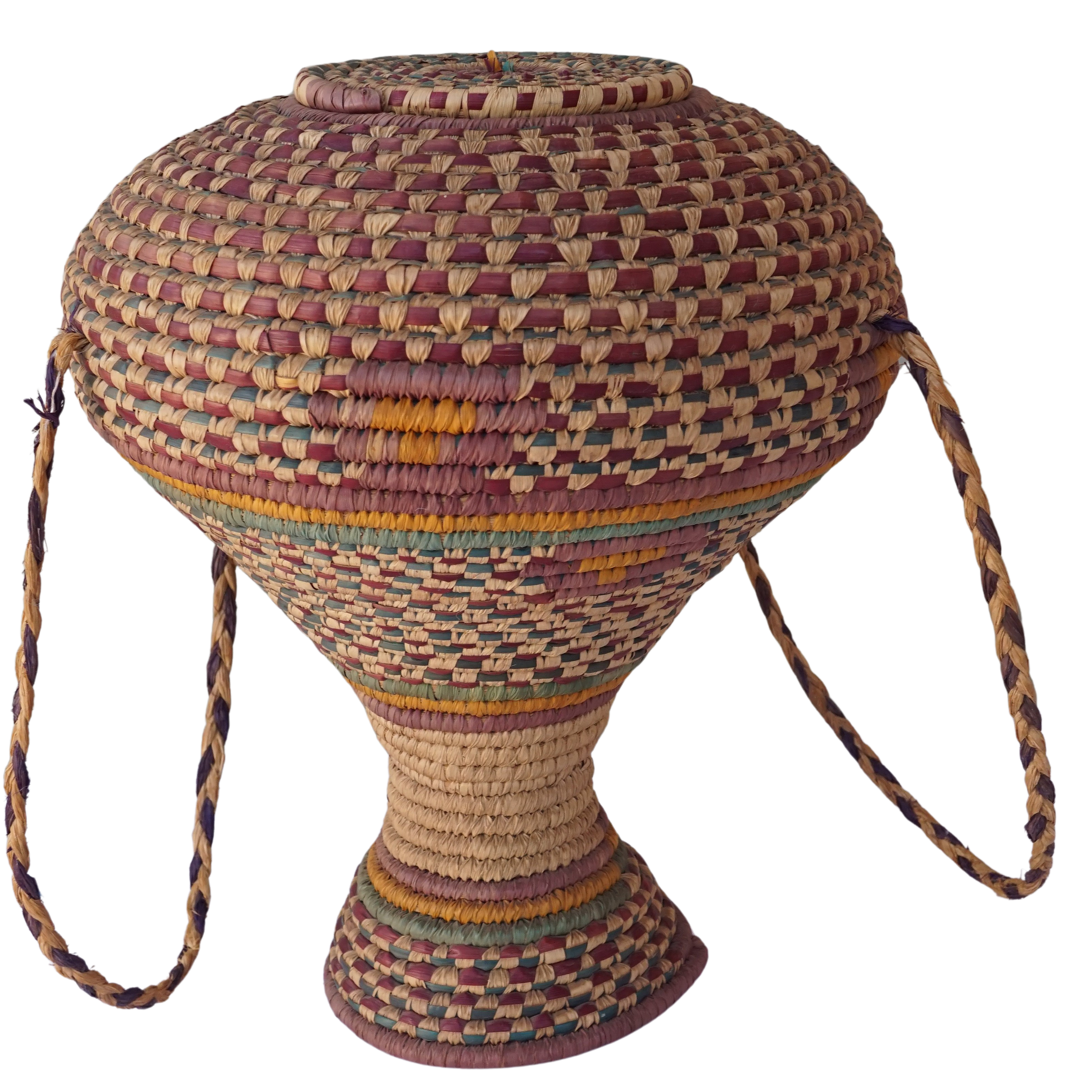
As a collector Bert Flint was collecting objects before they became fashionable on the art-market. And when it became fashionable he had to look for something else because he was poor.
“I started collecting wickerwork because it was still cheap at a time when pottery had already become expensive. This was also bought by antique dealers from Europe and America and was also bought by Yves Saint Laurant. And who am I that I should rival him. I couldn’t. Wickerwork is something no one thinks about yet. What I did was collect before it was fashionable. Then I had to stop and find something else that is not yet so expensive on the market.”